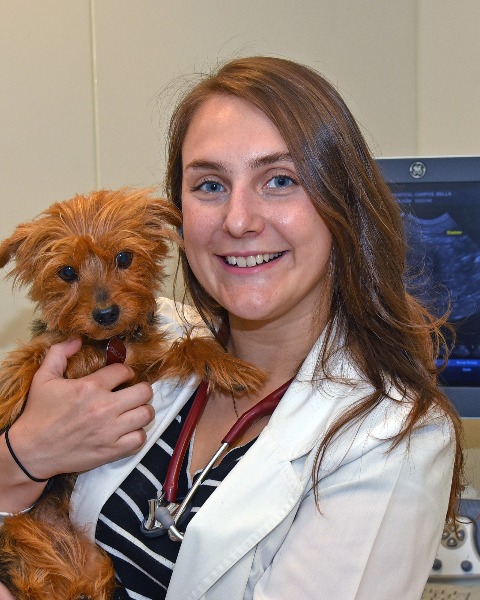
Sylvia Lesnikowski, DVM, DACVIM (SAIM): No financial relationships to disclose
Presentation Description / Summary: Gastrointestinal signs are some of the most common reasons for veterinary evaluation of companion animals. This lecture will outline a focused and systematic approach to identifying and classifying gastrointestinal signs. Particular attention will be placed on creating a focused differential list that helps prioritize diagnostics and empirical treatments. This lecture will provide practical and inexpensive options for diagnosing gastrointestinal signs when advanced diagnostics (such as ultrasound and endoscopy) are unavailable. Accessible treatment options, such as diet trials, fiber supplementation, cobalamin, empirical steroid trials, synbiotics, and fecal transplants will be discussed, with evidence from the recent literature supporting their indications and use.
Learning Objectives:
Create a focused differential list for gastrointestinal signs to help prioritize diagnostics and empirical treatments utilizing a spectrum of care approach.
Utilize targeted diagnostics for workup of gastrointestinal disease when advanced diagnostics (such as ultrasound and endoscopy) are unavailable.
Provide accessible treatment options, including diet trials, fiber supplementation, cobalamin, empirical steroid trials, synbiotics, and fecal transplants for management of gastrointestinal signs.