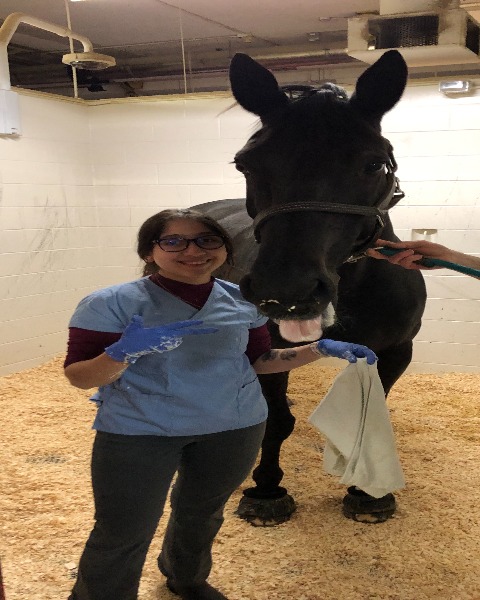
Abstract: Background – The acute phase protein Serum Amyloid A (SAA) increases rapidly in horses following inflammatory conditions. Information regarding the effect of routine, potentially stressful veterinary procedures on SAA is limited. Objectives – To evaluate the effect of routine medical procedures on SAA concentrations in healthy mares and develop a stress scoring system. Animals – Nine healthy teaching herd mares (aged 11-26 years). Methods – Prospective observational cohort study. Mares participated in teaching laboratories for veterinary students, including routine procedures: colic work-up (CW; rectal palpation, nasogastric intubation and abdominocentesis) and reproductive evaluation (RE; rectal palpation). Blood was collected pre-laboratory and at 30-minutes and 1-day post-laboratory. A modified stress-score (MSS) using behavioral cues was employed to quantify stress pre-, during and post-procedures. Stress was defined by increases in blood glucose, cortisol and ACTH 30-minutes post-laboratory compared to baseline. SAA was measured in whole blood using a point-of-care assay (Stablelab, Zoetis) and latex agglutination test (VET-SAA ‘Eiken’). Pre- and post-laboratory values were compared using Wilcoxon signed-rank tests. Results – Laboratories were defined as minor (RE) or major (CW) stress based on pre- to post-procedure increases in blood glucose (p = 0.031), ACTH (p = 0.047) and cortisol (p = 0.031). SAA was not significantly affected by any procedure. MSS increased from baseline following CW (p = 0.022). Conclusions and Clinical Importance – Routine medical procedures do not affect SAA concentrations in healthy mares, supporting its reliability as a biomarker for inflammation. The MSS is a useful indicator of equine stress during teaching.